Engineering environment
A reliable HDL flow begins at the workstation
Source layout, command repeatability, terminal habits, display setup, and physical comfort all shape how quickly an engineer can understand a failing design.
Give each artifact an obvious home
A compact HDL project benefits from a predictable structure: synthesizable source, testbench code, constraints, scripts, generated output, and documentation should be distinguishable at a glance. Do not mix generated netlists or waveforms with reviewed source. Keep third-party models in a clearly labeled location with their license and version. Use explicit file lists when compile order matters.
Build output should be disposable and reproducible. A clean command ought to remove only known generated directories, and a build command ought to recreate them without depending on unrecorded shell state. Store the selected language mode, top module, include paths, defines, and library mappings in scripts or configuration rather than in terminal history.
Make the shortest useful command deterministic
A developer should be able to run one focused test quickly and the full regression unattended. Both paths should return meaningful process status. Record the test name, random seed, configuration, and tool version in results. Put optional waveform generation behind a switch so ordinary runs remain fast, then preserve the exact command for any failure that needs visual debug.
Diagnostics work best when the editor and terminal agree about paths and line numbers. Avoid filters that colorize or rewrite output so heavily that continuous integration cannot parse it. Keep the first causal warning visible. A wall of repeated errors often begins with one missing include, failed elaboration, or width mismatch near the top.
Reduce path friction without hiding state
HDL work jumps between source hierarchy and filesystem hierarchy. Editor tags and language-aware navigation help with module definitions and signal references. Shell directory bookmarks help with source, run, and report locations. The DirB page explains one historical bash bookmark approach and the security considerations around sourced shell code.
Convenience should remain inspectable. Print the current directory before destructive or expensive commands. Prefer project-relative scripts over one person's absolute paths. Keep environment setup narrow and documented. A new terminal or a colleague's machine should reproduce the intended tool selection without a collection of invisible aliases.
Protect attention and physical comfort
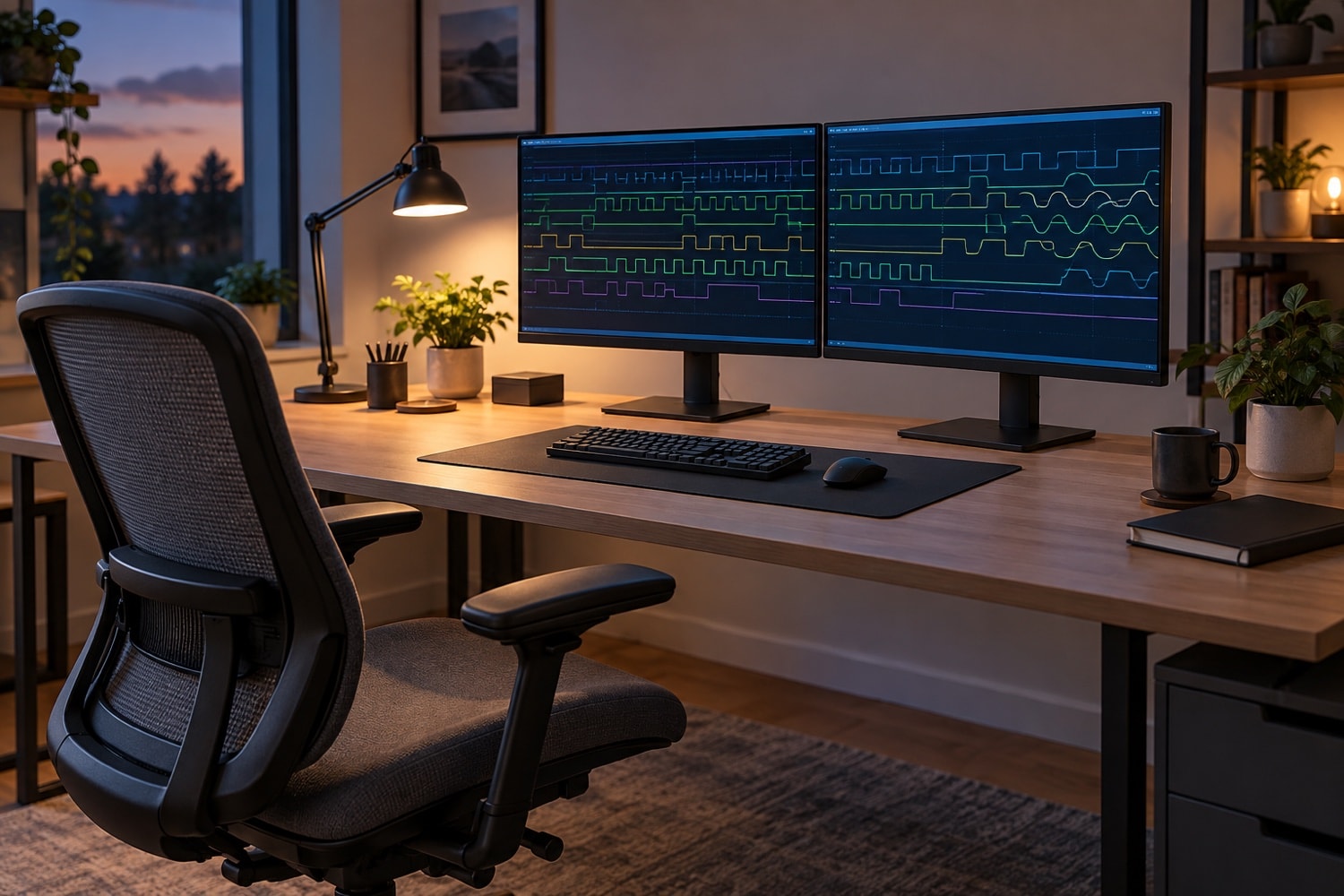
Waveform debug can hold a person in a fixed posture for long periods. Arrange the primary display, keyboard, pointing device, and reference material so frequent work does not require sustained twisting or reaching. Adjust chair and display height to support a neutral posture, and change position periodically. Glare, tiny waveform text, and excessive display brightness add fatigue to already demanding reasoning.
Use screen space by role rather than by accumulation. One view can hold the failing transaction and relevant waveforms; another can hold source and the test's expected result. Close unrelated traces and panels. A narrow visual hypothesis makes both the workstation and the debugging process calmer.
Long-running jobs should not require long-running attention. Let the terminal report progress at useful intervals, keep logs searchable, and make completion or failure visible without continuous watching. Breaks are easier to take when a test can be resumed from a named result instead of an undocumented interactive state.
If a setup or movement causes pain, stop the activity and seek guidance from a qualified professional. This page offers general workstation organization, not diagnosis or treatment, and no desk arrangement can substitute for individual assessment when symptoms persist.